Want to see Grip in action?
Join fellow event professionals for a live demo of Grip every Thursday.

With AI driving unprecedented demand for data centers and associated technology, the industry needed a new event to bring together the digital infrastructure space. Yotta launched in 2023 to become that platform. The event grew rapidly, but so did the complexity. Managing thousands of attendees alongside hundreds of sponsors required more than cobbled-together systems. The show needed an integrated event platform that could handle all Yotta’s requirements without adding any unnecessary complications.
The team made removing friction a top priority, both for attendees and sponsors. By implementing Grip’s full event suite – Engage, Manage and Onsite – Yotta created a seamless experience for its participants. In addition, a single team member was able to comfortably handle tasks (like exhibitor / sponsor management) that would normally require two or three people, while attendees enjoyed a smooth registration process and smart networking. The integrated platform freed the team to focus on creating memorable moments that keep participants coming back. With this foundation in place, Yotta is now ready to scale to 6,000 attendees and position itself as the CES of digital infrastructure.
.jpeg)

I view Grip as the operating system for the whole event. It allows us to power all of the transactions, the connections, and the engagement we need to accomplish our mission.

In 1956, IBM's first hard drive stored around 5 megabytes and literally weighed a ton. Today, data centers measure storage in petabytes and exabytes. By 2030, it’s estimated that humanity could produce a yottabyte of data every single year. That’s a 1 with 24 zeros after it!
To put that in perspective, if you tried to download a yottabyte on your high-speed 1Gbps internet connection, it would take approximately 254 million years (and probably violate your provider’s fair use policy).
For Rebecca Sausner, CEO of Yotta, and her team, a yottabyte is more than just a large number. “We were trying to create a show that brings the whole digital infrastructure ecosystem together, so we can all deal with this yottabyte of data that’s coming at us, a lot of it driven by AI”, explains Rebecca. “We wanted a unique name for the event that was memorable, and that’s when we decided to go with Yotta.”
The vision was to bring together everyone involved in powering the AI economy, from the data centers themselves through to the software used to run them. The timing couldn’t have been better. Six months after they came up with the idea for Yotta, ChatGPT launched.
The AI revolution that Yotta had anticipated was now a reality.
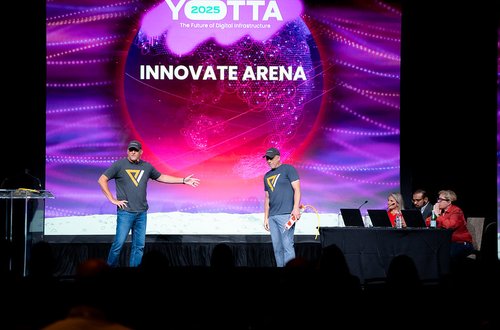
Fast forward to today and Yotta has firmly established itself as a must-attend show in the digital infrastructure space. 2025’s event took place in Las Vegas and Rebecca’s team embraced the setting with open arms.
“It’s all about engagement,” says Rebecca. “Attendees want to be intellectually and socially engaged with the content and networking, but we also strive for a level of emotional engagement. We really lean into the surprise-and-delight moments that build loyalty and create those social share moments that people love. That really helps you grow from year to year.”
One of the most distinctive elements was the Yottaverse itself. The team created an entire narrative world where attendees were taken to a galaxy far, far away. Their mascot, an astronaut and his robot dog, became the ambassadors of this universe. Inflatable structures, like coffee lounges and meetup zones, reinforced the theme and gave the event a distinctive visual identity.
“We wanted people to mentally make that journey from Las Vegas into the Yottaverse,” explains Rebecca. “The inflatable structures were a fun way to get people into the right headspace.”
While creating these memorable moments was a key part of the Yotta experience, having a robust platform behind the scenes was even more critical, especially as the event scaled.
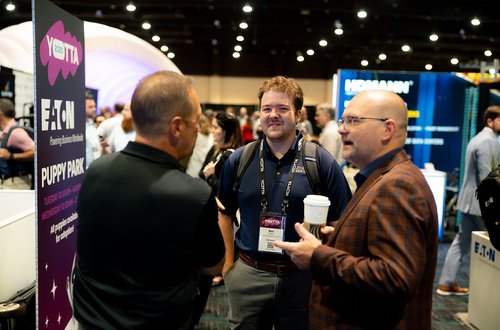
Having previously managed other industry-leading events at Shoptalk and Connectiv, Rebecca has firsthand experience of what works (and what doesn’t) when it comes to event technology.
For Yotta’s inaugural event, Rebecca used Engage, Grip’s module of engagement tools. One of those tools, MustMeet, was used to power Yotta Connect, the show's one-to-one meetings program. However, in year two, as the show doubled in size, the operational complexity also multiplied. Rebecca made a strategic decision to bring everything under one roof and implement Grip’s full product suite which included an event management system (EMS), with Registration plus engagement tools, including Grip’s Event App, and its onsite solution, featuring badge printing.

The first challenge was registration. Some systems create bottlenecks at this stage, requiring every single ticket holder’s information upfront before a company can complete the purchase.
Grip's Registration product offers a more flexible approach, allowing companies to buy tickets for their entire team and assign attendee details later. One person, like an executive assistant, could handle the transaction, then distribute tickets internally on their own timeline, making the whole process much easier.
While those purchasing tickets for themselves had the opportunity to share their attendance with their networks via Snöball, the social sharing solution that Yotta used. The sharing experience was embedded directly into the registration workflow, thanks to Grip’s Native Integration with the tool. By working with Snöball to activate and manage this attendee advocacy, Yotta empowered attendees to become brand ambassadors, generating over 1,000 social shares and resulting in 54 directly attributed conversions. This strategy demonstrated that when credibility signals are properly instrumented, peer-to-peer influence becomes a trackable and scalable revenue driver.
Similarly, managing event exhibitors and sponsors is traditionally a time-consuming process, as organizers try to coordinate a constant barrage of emails with logos, company descriptions, speaker bios, booth requirements and countless other deliverables. Think ‘herding cats’ and you wouldn’t be too far off the mark.
To help solve this, Grip’s Exhibitor / Sponsor Management product was used to centralize everything into one dashboard. Sponsors and exhibitors could see exactly what they’d completed and what still needed attention. All tasks and deadlines were clearly visible, and sponsors could then upload the necessary files directly into the system. Hours spent searching in inboxes for an exhibitor’s SVG logo were a thing of the past.
As a result, Chiyon Yoon, Yotta’s Sponsor Logistics Manager was able to comfortably handle all 177 sponsors and exhibitors by herself. "Scaling from 101 to 177 sponsors in a single year is a massive undertaking for any logistics lead,” revealed Chiyon. “But the Grip platform helped me maintain high-quality, personal relationships with every sponsor, while managing the sheer volume of deliverables required for a show of this size."

According to Yotta’s post-event surveys, attendees primarily come to meet new partners or clients and connect with industry leaders.
Rebecca used Grip Engage to create multiple networking formats, designed for the different ways people like to connect:
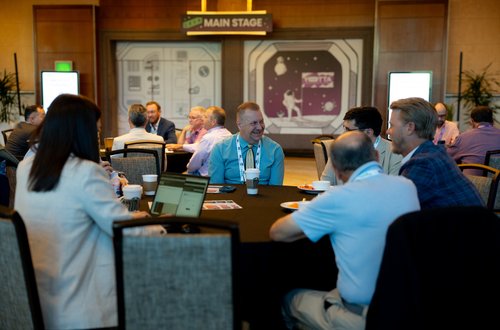
“We know that people want to network around topics,” says Rebecca. “They might be afraid to just walk up to somebody at happy hour, but if you make it a breakfast and you put a sign that we’re going to talk about the power of liquid cooling, lots of people will come along and share their knowledge on that topic.”
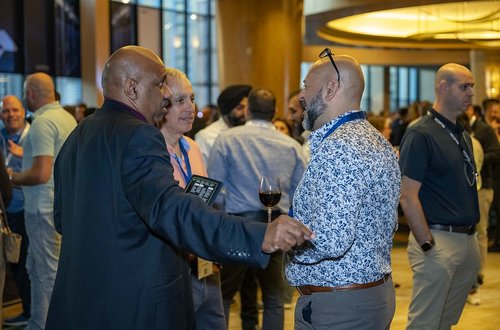
These meetings happened alongside more informal networking opportunities. For example, 40 people signed up for a run club, taking place in the Nevada desert at 6:00 a.m. While on the final afternoon, when trade shows typically see a significant drop-off, Yotta consolidated all activities into the expo hall to bring the most traffic to the exhibitors and get everyone together.
And whenever the participants were together, there were valuable business opportunities for Yotta’s sponsors. Chiyon explains that Grip’s Lead Retrieval feature allowed sponsors to scan participant badges to generate leads: "Our exhibitors love that lead retrieval is integrated directly into the event app. It eliminates the need for external devices, making the onsite experience incredibly seamless. It allows our sponsors to focus on what matters most: having meaningful conversations with participants."
To drive higher-quality engagement between attendees and partners, Yotta utilized Grip’s Audience Connection Tool (ACT) to help sponsors identify and reach their most relevant prospects. ACT is a first-of-its-kind platform that allows event organizers to safely monetize their data. It enables sponsors to find and message specific audience segments via organizer-verified email campaigns, all while ensuring that individual participant identities remain completely anonymous.
Rather than handing over the full attendee list and losing oversight of the data, Yotta gave sponsors access to ACT. This allowed them to search the database using filters like company name and job title. Crucially, the platform kept all personal names and contact details hidden from view, allowing sponsors to tap into Yotta’s valuable audience in a way that was secure, controlled and easy to scale.
Once they identified their target group, each sponsor used 100 ACT credits to send out 100 digital invitations. Because the entire process was managed within the ACT system, these emails were sent from the organizer’s own address. This approach significantly improved trust, resulting in much higher deliverability and open rates than traditional outreach.
Chiyon used the platform strategically to satisfy sponsor demands for data without ever compromising the event’s most valuable intellectual property: the delegate list. Chiyon noted: “We used ACT to boost attendance for our curated breakfast sessions, lunch sessions and private dinners, which were a massive success. Providing sponsors with a secure way to invite their own prospects was a major value-add. Furthermore, we could provide them with analytics on who engaged with those invites, offering a level of transparency and ROI that our partners truly valued.”
In many cases, the best event technology is invisible. Attendees should be able to simply arrive and start enjoying the event without having to think about registration systems or badge printing.
Grip Onsite made that possible. Using kiosk check-in, attendees scanned QR codes from their confirmation emails and printed badges instantly. The process eliminated manual name lookups and data entry, speeding up the entire registration flow.
More importantly, information was shared automatically across all three components without users having to worry about duplicating data or constantly updating details. Register in Manage, schedule meetings in Engage, and print badges in Onsite. Simple.
“I view Grip as the operating system for the whole event,” says Rebecca. “It allows us to power all of the transactions, the connections, and the engagement we need to accomplish our mission.”
In just two years, Yotta has achieved exponential growth, evolving from a promising launch to a must-attend global summit for AI and digital infrastructure leaders.
Attendance more than doubled from 1,650 in the first year to 3,350 in year two. With an NPS score of 55, it was clear that attendees enjoyed the event and were happy to recommend it to others. The team also achieved a 50% on-site sponsor rebook rate, exceeding the 40% target and signaling strong exhibitor satisfaction.
Perhaps most importantly, using a truly integrated platform freed up the team’s time and mental energy. Instead of troubleshooting technical integrations or chasing exhibitors and sponsors for deliverables via email, they could focus on creating those memorable surprise-and-delight moments.
With two successful years under their belt and a proven operational model, Rebecca and her team are now preparing for what comes next.
For year three, the team plans to double the number of attendees to over 6,000. The show is also moving to Caesars Forum, a larger venue that will expand the show floor from 60,000 square feet to over 100,000. That increased space creates room for approximately 300 sponsors and exhibitors.
The new venue also unlocks new possibilities, with an outdoor terrace that Yotta plans to transform into a festival-style activation zone. Sponsors and exhibitors will be able to showcase their technology outside in a show-and-tell environment that traditional expo halls can’t accommodate.
Meanwhile, the Grip platform will continue to evolve alongside the event. “When you’re having to cobble together all these different systems yourself, it’s like matchsticks and tape,” explains Rebecca. “Having an elegant solution that does it all means one less thing to worry about.” While having a team who works alongside you is the only way you can scale quickly: "Working with the Grip team has been a true collaboration,” explains Chiyon. “Their support is exceptional, the turnaround on any request or technical adjustment is incredibly fast. It feels like they are an extension of our own team, dedicated to ensuring the platform evolves alongside the unique needs of the Yottaverse."
As Yotta continues its trajectory as one of the world’s fastest-growing shows, the scale of its impact is finally starting to match its name. By removing every ounce of operational friction, Grip has allowed the Yottaverse to expand at the speed of the AI revolution itself. There’s a fitting symmetry at play here: the very AI algorithms Grip uses to spark these million-dollar connections are likely humming through the server racks managed by the people in the room.
In the race to 6,000 attendees and beyond, Yotta brings together a community that’s building the engine of our modern world.
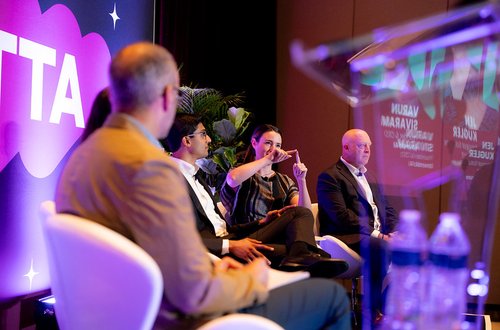
In a market moving at the speed of fibre optic cable, time is everything. Yotta’s team knew that to meet their goal of becoming the CES of digital infrastructure, it’d need to double in size every year. Here are their top tips for scaling fast while still delivering the maximum value to all participants:
“My top tip is to think about the customer experience,” says Rebecca. “Whether it’s the attendee buying the ticket or the sponsor and the exhibitor who are preparing to participate at the show, do as much as you can to remove those friction points.”
For example, Yotta streamlined the registration process with Grip Manage, allowing people to easily buy tickets for their teams without needing all the individual attendee details upfront. The team also ensured participants weren’t overwhelmed with unnecessary questions on the registration form.
“We have a certain number of questions for regular participants,” explains Rebecca. “When we start the matching program, there’s a deeper level of questions that people have to answer, but they’re more committed. They’re getting a more advanced product, and by then they’re bought into the process.”
The result is a smooth registration for the majority while still capturing rich data for those wanting a premium networking experience.
Managing exhibitors and sponsors typically means endless email chains with attachments. Grip’s Sponsor / Exhibitor Management product transformed this chaos into an organized, efficient process. Exhibitors and sponsors logged into one central dashboard where they could see exactly what they'd completed and what still needed attention. This means logos to upload or profiles to complete.
“The sponsor portal has completely transformed our workflow,” said Chiyon. “Instead of chasing assets through endless email threads, everything, from logos to digital ads, is centralized. Sponsors have total visibility into their tasks and deadlines, which keeps them on track and significantly reduces the manual back-and-forth on our end."
As well as making it easier for the team to handle all the sponsors, it also made things easier for the exhibitors and sponsors. “I don’t think I’ve ever had a sponsor compliment on our process for collecting their information before,” says Rebecca. “With Grip, we had dozens of compliments on the sponsor management portal.”
Restricting the number of meetings may sound counterintuitive, but too many meeting requests can have a negative impact on the whole experience. When you launch participant arranged networking, some attendees will inevitably request meetings with everyone on the platform. This overwhelms popular attendees (especially VIPs and buyers) and dilutes the connection quality.
“If you’re a buyer from a premier company, you don’t want to log into your app and see that you have 500 meeting requests,” says Rebecca. “You’ll give up right there.”
Yotta implemented a smart solution, limiting attendees to five pending meeting requests at a time. Once those requests are accepted, they can send five more. If requests are rejected or ignored, they need to wait.
The system protects high-value attendees from inbox overload while encouraging more thoughtful, strategic networking.
For the first year, the Yotta team scheduled their one-to-one hosted buyer meetings during the lunch hours on days two and three. However, they soon discovered that people were missing their meetings, either caught up in other conversations or content.
For year two, Yotta moved all pre-scheduled, one-to-one meetings to day one, before the main show opens. “Everybody comes, they take part in their meetings and get that part out of the way,” explains Rebecca. “Sponsors and exhibitors can easily extend the conversation if it’s going well and invite attendees to stop by their booth later on during the show.”
That also gave the team a little leverage with the attendees to ensure that they arrived and participated in their meetings. If someone wasn’t there for their meetings, they didn’t get their badge.
Meeting no-shows dropped dramatically and sponsors got guaranteed face time with qualified buyers. For hosted buyer programs or any high-value meeting initiative, front-loading these connections before the show floor opens ensures they actually happen and sets a positive tone for the rest of the event.
Every disconnected system in your event tech stack increases the potential for mistakes and means more work for your team. When registration lives in one platform, meeting scheduling in another, sponsor management in a third, and badge printing in a fourth, your team spends countless hours just keeping systems aligned.
“As an event leader, there are always problems where you have to enter things in three places and are trying to keep everything up-to-date,” says Rebecca.
By using Grip to consolidate registration, networking and onsite operations into one integrated platform, Yotta eliminated these inefficiencies and streamlined the whole experience. “Having all of these combined into one system was really important and valuable for us,” says Rebecca. “To the extent that you can remove steps and make things more efficient, it’s just going to make everybody more productive and reduce mistakes.”
Commodities People has enjoyed explosive growth over the last few years. From just one event in 2021, they now host six events spread across three continents. They use Grip to generate high engagement and a scalable future.

The latest XP Music Futures music conference fueled artistic growth with over 200 panels and workshops, along with plenty of opportunities for attendees to meet up, share their experiences and network.
The Gathering is an exclusive hosted buyer event for the gift and souvenir industry. With Grip Engage powering the meeting experience, Clarion Events gained full visibility into attendee engagement — resulting in 2,371 confirmed appointments, an 85% response rate, and some participants securing million-dollar deals at the show.


