Want to see Grip in action?
Join fellow event professionals for a live demo of Grip every Thursday.

Commodities People has enjoyed explosive growth over the last few years. From just one event in 2021, they now host six events spread across three continents.
However, rapid expansion brought its own challenges. Manual processes, tech stack integrations and location logistics were all holding the event back. At the same time, participants weren’t getting the full benefit of the event app, with below average adoption and meeting requests.
It soon became clear that the old way of doing things wasn’t going to cut it anymore, and things needed to change if the team wanted to keep scaling.
The Commodities People team assessed their existing operations to see what adjustments could be made to improve results.
By adapting their strategy, they were able to eliminate old practices (like producing printed materials for each event), integrate their software effectively, and educate participants on how to get the most out of the show.
As a result, app activation jumped to 73%, meeting engagement soared and the company is now confidently looking ahead to the future. With its upcoming Dubai event already generating record-breaking momentum, it’s clear that Commodities People have found the perfect formula to power the future of the industry.


Scalability comes from finding the right tools, like Grip, and implementing them so we focus on the bigger picture.
.png)
As Europe navigates energy dependence and volatile markets, having a place where the energy industry’s experts can gather and connect is more important than ever. Staying up-to-date on the latest shifts and changes is critical, and missing one small regulatory change or market shift can end up costing millions.
Commodities People has built up a well-deserved reputation for being the top events organizer for the global commodity and energy markets, delivering high-quality business conferences and exhibitions since 2009.
One of those shows is Energy Trading Week, the leading industry event for energy trading in Europe. Over 2,000 experts gathered to discuss current topics such as regulation, risk management and new trading strategies. Attendees get a sneak peek into what the future holds and how they can thrive in that new environment.
From one small conference, the team now organizes multiple events across Europe, the Americas, and APAC, successfully connecting energy traders and commodities traders around the world.
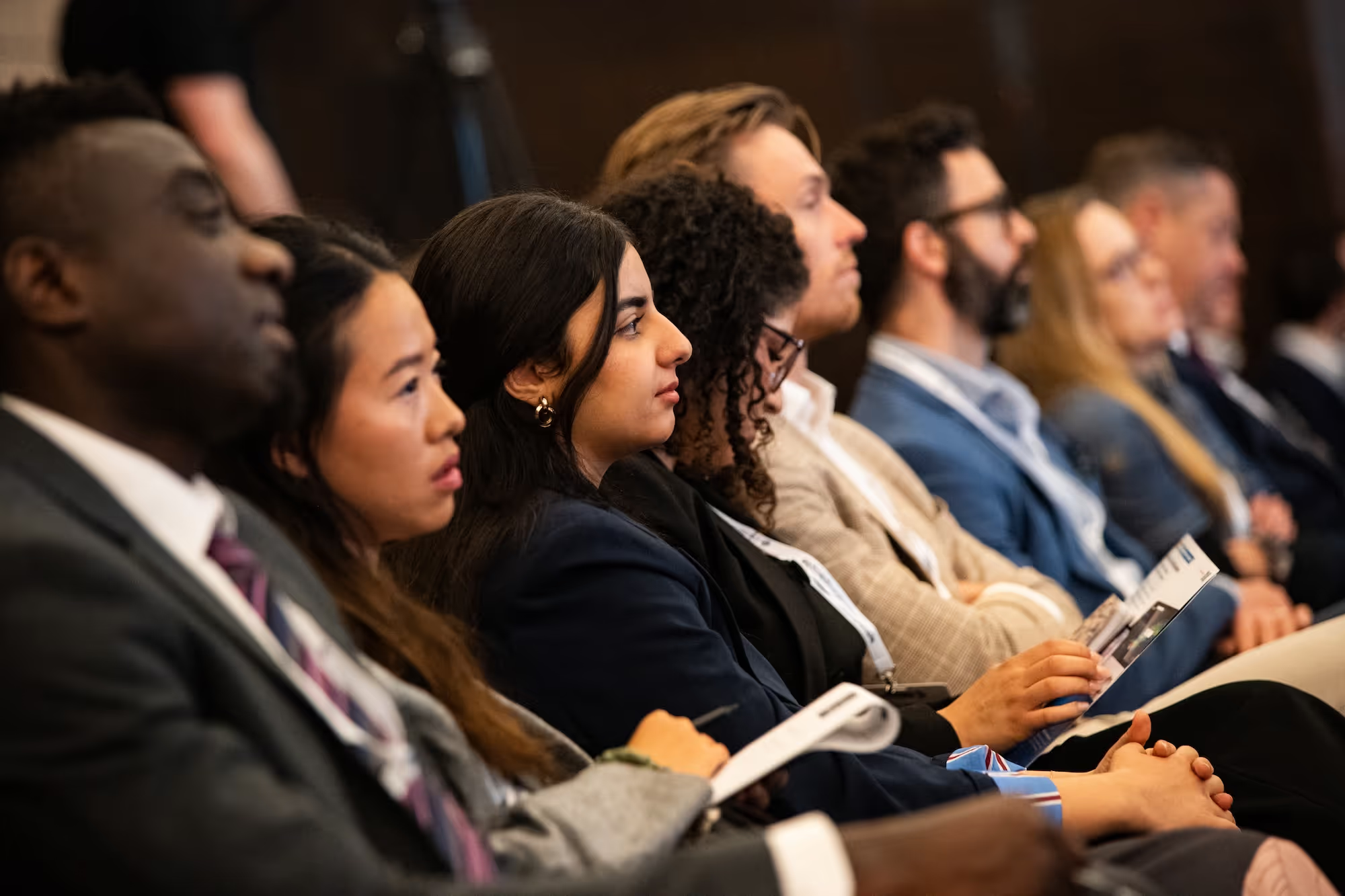
A big part of the events’ success is the team’s attitude toward meetings. While the conference content is still important, the real value comes from the opportunity to create high-quality business relationships.
The numbers back this up. According to research from Freeman, 51% of event attendees cite effective networking as a key reason for returning to an in-person event. Content is increasingly available online through recordings and livestreams, but no technology has managed to replicate the magic of face-to-face networking.
When Gina Dale, Operations Director at Commodities People first joined the team in late 2021, the pandemic meant many events had moved online. However, the team recognized the importance of getting back to in-person connections as quickly as possible.
“We stepped away from hybrid models quite swiftly,” says Gina. “We still offer audio recordings, but we stopped doing video recordings because the engagement wasn’t there. People know they have to come to the event if they want the full experience.”
The team has been using Grip as their event platform since 2021, where meeting management is a core feature. Attendees can browse profiles, request meetings, and schedule time in designated meeting lounges or at exhibitor booths. The Event App then guides them to the right location at the right time, eliminating the confusion and missed connections that can easily happen on busy conference floors.
However, while the events were already a success, Gina realized there was still more that could be done to elevate them, to make them essential dates in the industry calendar.
Gina started by reassessing the internal processes that went on behind the scenes. For example, the team was still producing printed materials (like attendee lists and agendas) for each event, adding extra costs and headaches. The agendas themselves were being managed in Word documents and Google Sheets, and any changes had to be manually transferred to the event management app and website. Errors were inevitable, and keeping everything synchronized consumed hours of valuable time.
Similarly, while the team was using Grip’s Event App, neither they nor the event participants were getting the full benefits. Adoption wasn’t as high as she expected, and responses to meeting requests could also have been higher.
In addition, Gina had an even bigger nemesis to tackle: “Badging can be the worst thing on the planet,” she says. “Before last year, I would cry over badges at every event.” Every badging system she tried had issues. In one particularly stressful case, the badging system failed the night before an event. Gina stayed awake all night, frantically arranging for 1,500 badges to be manually printed and delivered. “That was my breaking point,” she recalls. “That was when I knew something had to change.”
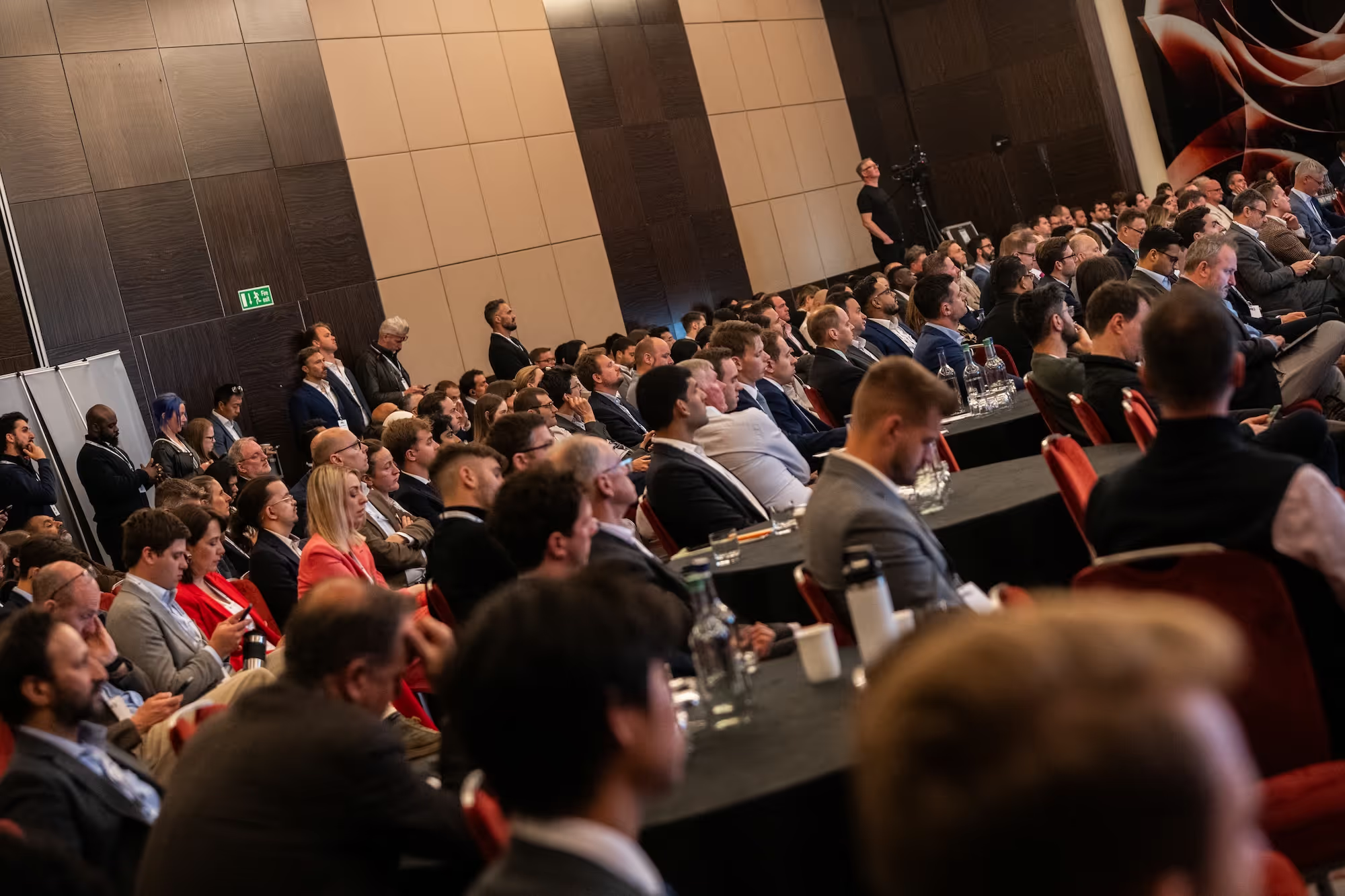
The number one priority for Gina was creating a mindset shift. For example, attendees were used to having printed agendas, and the event team was reluctant to take those away. Even though attendees were typically tech-savvy and comfortable using apps, the initial reasoning was that it was better to just give them printed agendas or at least keep a stack around as backup. “If you keep doing that, then things will never change,” says Gina. “Sometimes, you just have to force it.”
So she did. Gently, but firmly.
The team gradually stopped producing printed agendas. When someone came to the registration desk asking for a paper schedule, the staff smiled politely and offered a QR code to the app instead. If attendees didn’t want to download the app, they could still access everything through the mobile web version.
When it came to the event platform, the sales team could have showcased more benefits of the event platform in their conversations with exhibitors. So Gina became an internal and external evangelist. She made it her mission to educate everyone in the organization about what Grip could do and why it mattered.
Far more than just “an app for booking meetings,” Grip meant participants could enjoy making connections, receiving qualified leads, and get streamlined networking in a market where relationships were priceless. Thanks to Gina’s initiatives, the sales team was able to get that across to sponsors and exhibitors.
The education was extended to the exhibitors and sponsors themselves. For example, sponsors had access to badge scanning and meeting booking features, but many weren’t activating their company profiles or using the tools. So the team implemented a comprehensive onboarding process, with exhibitor guides sent months in advance, pre-event webinars, and check-in calls from customer success managers reminding sponsors to set up their Grip profile. As a result, everyone could get the absolute most out of the event platform.
The cultural shift was working, but there was still one more piece of the puzzle: the tech stack itself.
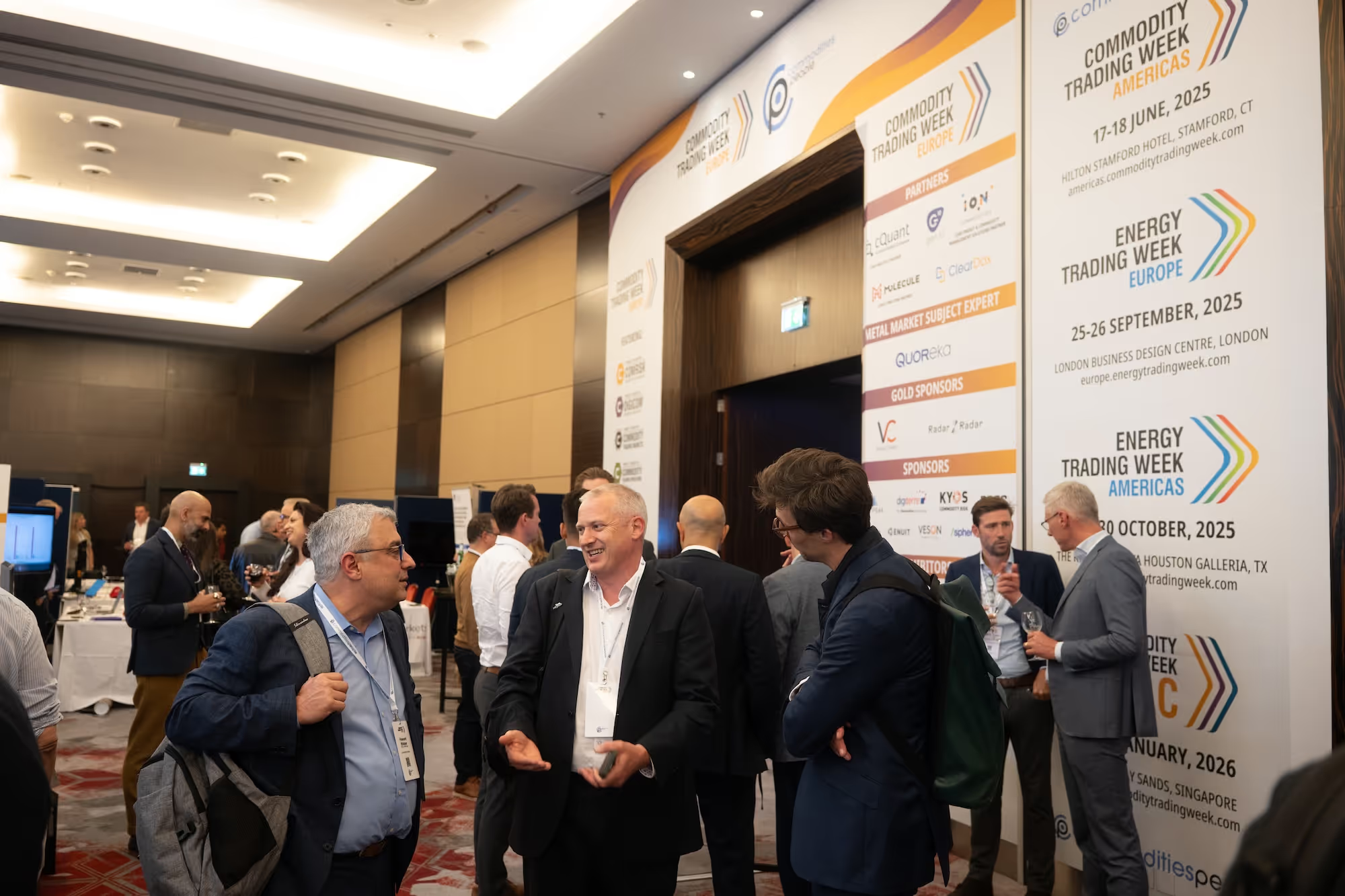
Changing attitudes was essential, but Gina knew that mindset alone wouldn’t solve the operational bottlenecks. The team needed tools that actually worked together seamlessly.
They already had a great foundation with Grip, but Gina wanted to reassess the other parts of their tech stack and identify any areas for potential improvement.
The biggest breakthrough came with Lineup Ninja, a session and speaker management platform that integrates directly with Grip. Before this integration, agenda management was a constant source of stress. With Lineup Ninja, producers could manage speaker submissions, schedule sessions, and approve talks in one place. When they approved a change or updated speaker information, it pushed directly to Grip and the website automatically.
Meanwhile, the registration system moved to Swoogo, which also integrated smoothly with Grip. Suddenly, data flowed between platforms instead of requiring manual transfers, and the risk of errors dropped dramatically.
Finally, Gina’s badging nightmares were resolved with XTag, a badging provider that actually delivered on the plug-and-play promise. Finally, badges just worked. Gina hasn't cried over badging since.
With the tech stack finally working in harmony, the team could move away from firefighting issues and focus on putting on the best event in the industry.
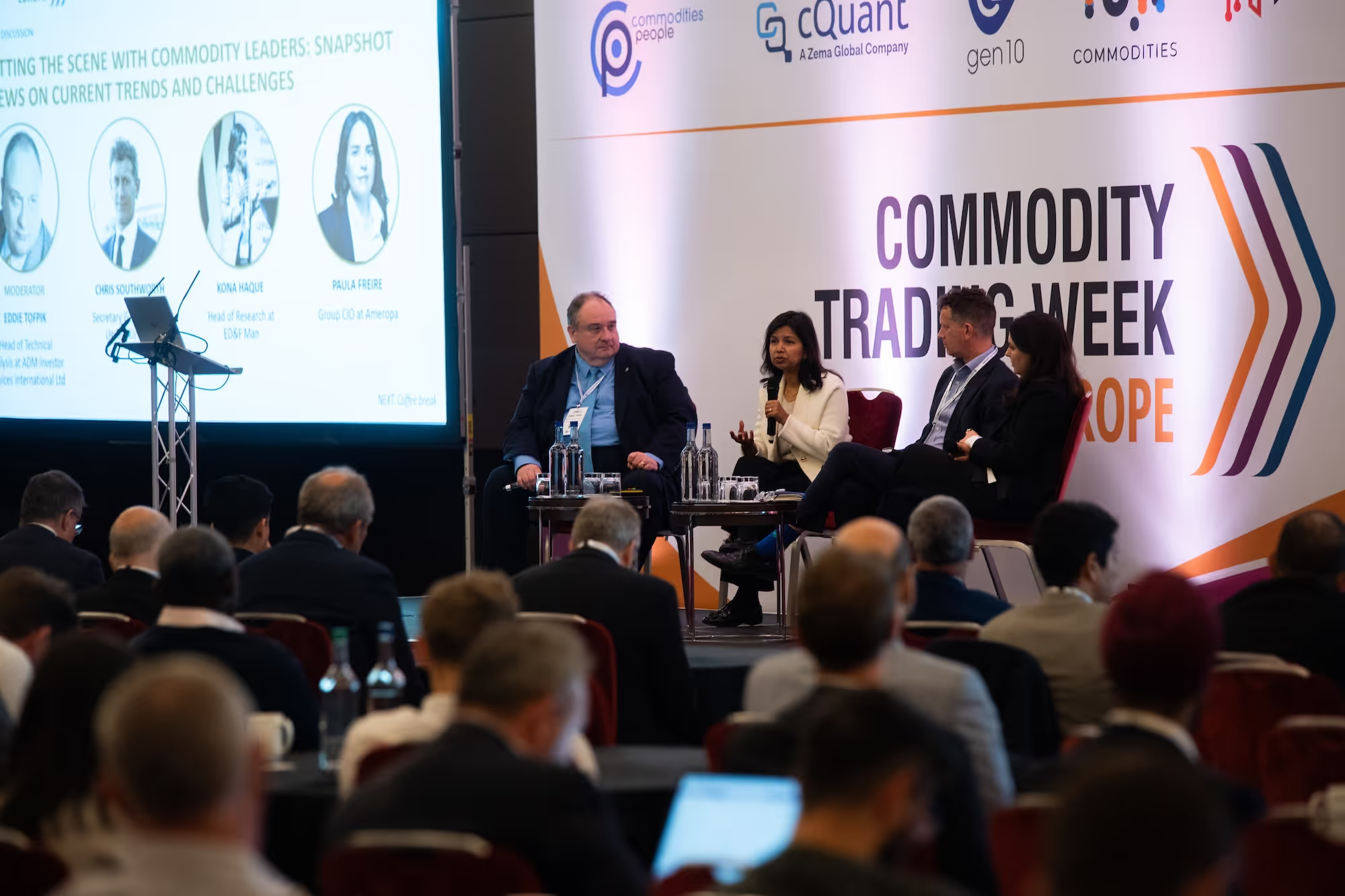
The changes made behind the scenes have had a powerful impact on the show itself.
App activation rates reached 73% at Energy Trading Week Europe, a substantial jump from the ~50% rates of previous years. As a result, more attendees were able to use the platform to plan their event experience, book meetings, and connect with relevant people.
Meeting recommendations surged from around 18,000 in 2023 to over 30,500 in 2025, a 70% increase. With improved metadata tagging by the Commodities People team and more active users engaging with the platform, Grip’s matchmaking algorithms were able to help attendees discover more relevant contacts and create more opportunities for meaningful interactions.
Beyond the metrics, the team was able to eliminate a lot of the stress that comes with hosting international events. The integrated tech stack meant organizers could update sessions and speakers automatically, saving hours of manual work and preventing errors.
With systems working smoothly and mental bandwidth freed up, Gina and the rest of the team now have the breathing room to think strategically about growth, assess new technologies, and build long-term partnerships.
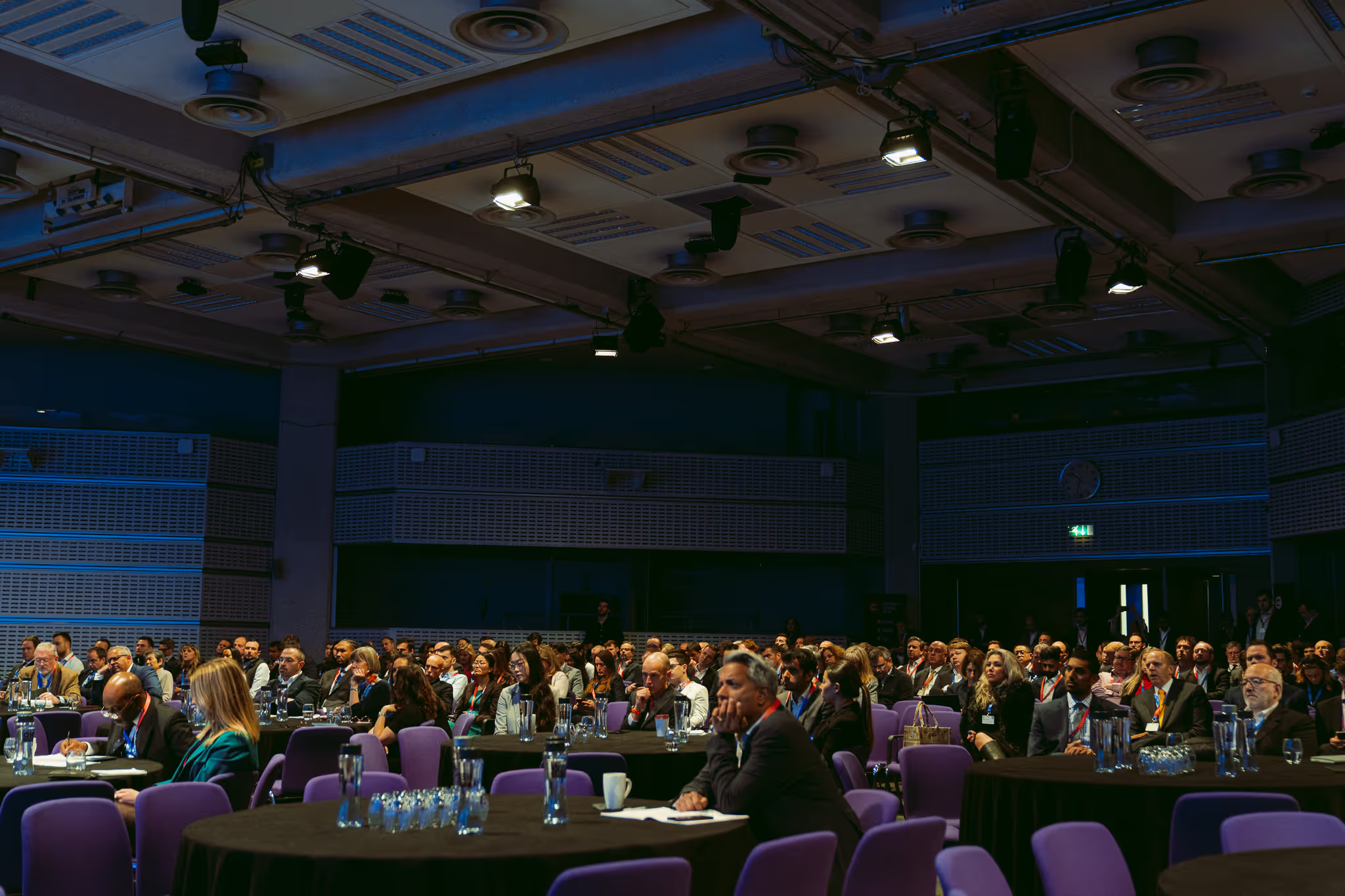
With operational foundations in place and engagement metrics trending upward, Commodities People is ready to continue scaling. The company has expanded from one UK event to six events across three continents, and it’s not stopping there.
The latest addition to the calendar is another Energy Trading Week, this time in Dubai. The show is still in the planning stages, but it’s already outperforming some of the other more established events in terms of sponsorship interest and percentage of targets achieved.
As the portfolio grows, Gina has learned that sustainable scaling requires solving the fundamentals first. While the events used to change venues every year, Gina’s now secured long-term homes for each event through to 2028. Multi-year venue agreements create stability and unlock additional benefits, such as better rates and established relationships with venue staff.
The same principle applies to other suppliers. Long-term contracts with AV providers, printers, and other key partners compound the efficiency gains.
All of this means the team can deliver better events where attendees can create more valuable business relationships. “We’ve come a long way,” says Gina. “The scalability has all come from finding the right tools and implementing them so we focus on the bigger picture.”
All of this enables the team to deliver superior events that foster deeper business connections with the energy community. This scalability is fueled by finding the right technical infrastructure, energizing the team’s operations and creating the headspace required to drive their long-term vision forward.
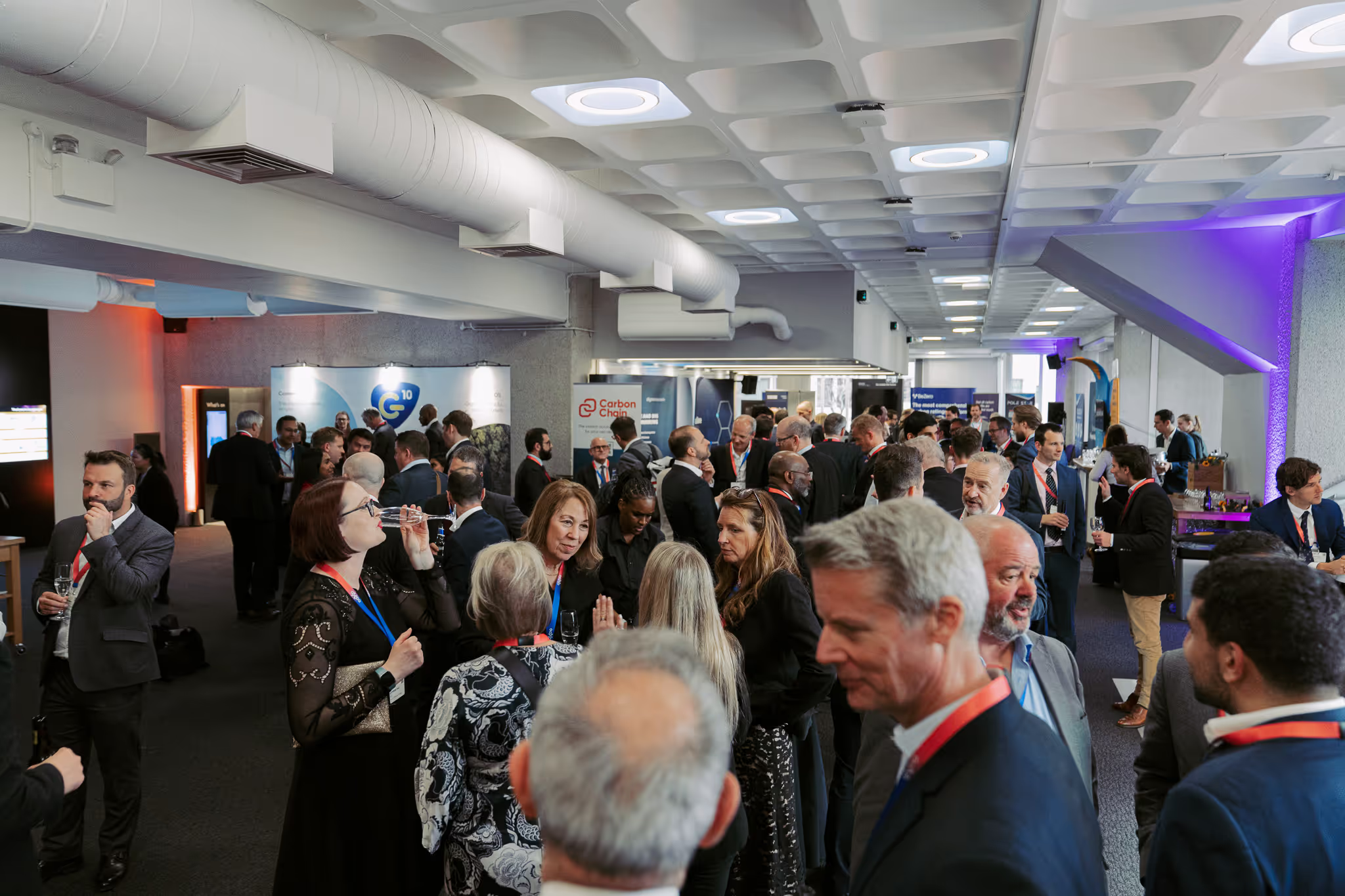
Even the simplest event has a lot of different moving parts. When you’re trying to scale, that complexity can quickly turn into chaos. Here are Gina’s top five strategies for other operations leaders who want to take their events to the next level.
Challenging the status quo is never easy, and there will always be people who resist new systems. However, there comes a point where you can only make progress if you let go of your old way of doing things.
For Gina, that started with getting rid of the printed agendas at their events. “People have a bad habit of worrying too much about rocking the boat, but if you have that mindset then things will never change.”
The key is being firm while remaining helpful. For example, when someone now asks for a printed agenda, the team helps them use the QR code to access the app or mobile website.
Excitement is contagious. If you’re excited about what you’re offering, your exhibitors and attendees will pick up on that. This starts with education, ensuring all your customer-facing teams are on the same page.
“Everyone needs to be educated, you need to build up that excitement internally,” explains Gina. “Then you need to make sure that excitement is shared with both delegates and exhibitors. After all, how are they meant to get excited if you’re not?”
Invest time in training sales, customer success, and production teams on the full capabilities of your event platform. When they understand the value, they’ll be able to share that with participants in a way that elevates their experience.
Manual data transfers, version control issues, and disconnected systems consume enormous amounts of time and mental energy. Finding tools that integrate seamlessly creates compounding efficiency gains. “It sounds small, but before we had the right apps, there were so many issues,” recalls Gina.
The integration between their session management, registration, and event app platforms eliminated hours of manual work and reduced errors dramatically.
Look for platforms with strong APIs and existing integrations. The time saved compounds across every event.
When problems come up, it might be tempting to hack a solution, particularly when you’re working with a tight budget. However, in some cases, trying to come up with a cheap solution only ends up costing you more.
After years of badging nightmares, Gina finally invested in a premium provider and the problem disappeared. “I don’t mind spending money on something that’s going to revolutionize the way people work, make them more productive, make their lives easier,” says Gina. “It’s all about making sure that we’re spending money on the right things.”
Identify the recurring pain points that cause you the most stress. Sometimes the right investment eliminates the problem entirely, freeing you to focus on higher-value work.
Changing venues, suppliers, and partners every year creates endless work. On the other hand, multi-year contracts provide stability, better rates, and the ability to build repeatable frameworks.
“I’m signing contracts for the next three years,” says Gina. “By getting those big things ticked off nice and early, I don’t need to worry about venues or suppliers for years.”
This approach transforms operations from constant reinvention to continuous improvement. You can refine processes instead of rebuilding them from scratch each cycle.
Yotta, a fast-growing AI infrastructure event, achieved exponential growth (200% YoY attendance) and a high NPS score (55) by implementing Grip’s integrated event management platform (Engage, Manage, and Onsite). This single system streamlined B2B sponsor management, drove attendee engagement with AI matchmaking, and reduced operational friction, enabling the Yotta team to focus on scaling to a planned 6,000+ attendees.
Discover how Surf Expo boosted connections and engagement with Grip’s event networking platform - making meaningful B2B relationships easier than ever.
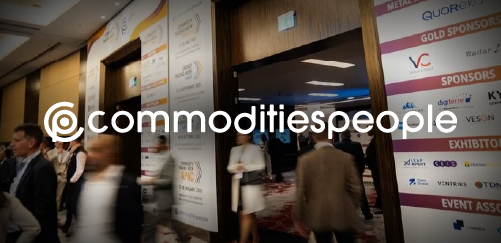
Commodities People has enjoyed explosive growth over the last few years. From just one event in 2021, they now host six events spread across three continents. They use Grip to generate high engagement and a scalable future.


